EDUCATION
Is There a Gender Gap in Aesthetic MedicineLeadership?
The UK aesthetic medicine sector has transformed rapidly over the past decade. Non-surgical procedures now account for the majority of treatments delivered, and care is increasingly provided in community-based clinics rather than hospital settings.
Alongside this shift, the workforce has changed fundamentally. Treatments once dominated by cosmetic surgeons are now largely delivered by nurses, pharmacists, dentists, and advanced practitioners.
Women make up a substantial proportion of this workforce. They also represent the overwhelming majority of aesthetic patients.
Yet when examining who holds regulatory influence, authors standards, shapes education, and occupies the most visible leadership positions, a contrasting pattern emerges.
Despite a female-majority workforce, leadership in aesthetic medicine remains disproportionately male.
This disconnect raises an important question: does a gender gap still exist in aesthetic medicine leadership – and if so, what is driving it?
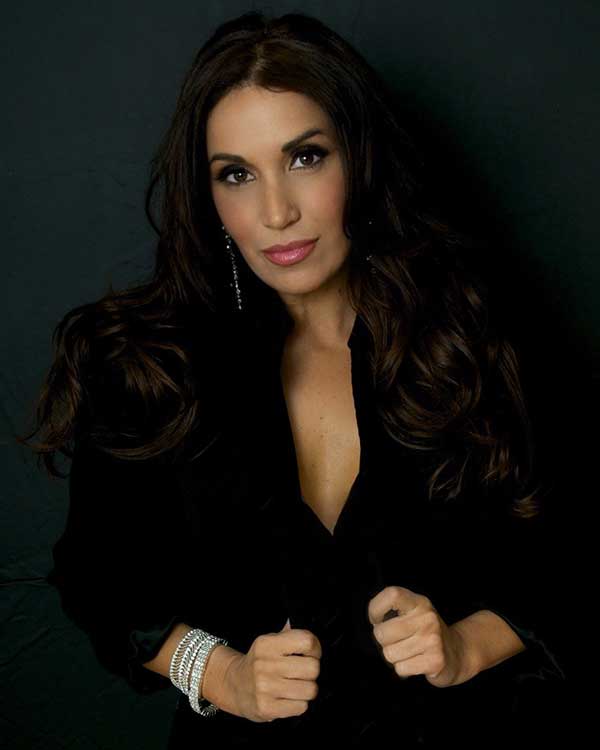
To explore this, we spoke with Antonia Mariconda, founder of Women in Aesthetics and long-standing advocate for ethical, evidence-led practice.
A Female-Majority Workplace
Globally, women comprise over 70% of the health and social care workforce, yet hold only around 25% of leadership positions (1).
The UK reflects this pattern. For the first time, female doctors now marginally outnumber male doctors, accounting for 50.04% of the medical workforce (2). Female representation is substantially higher across nursing, allied health professions, and community-based clinical roles.
Aesthetic medicine mirrors – and in some cases exceeds – these trends. Industry analyses suggest that approximately 70-80% of non-surgical aesthetic practitioners are women (3).
At the same time, women account for over 90% of aesthetic patients, based on international procedure data (4).
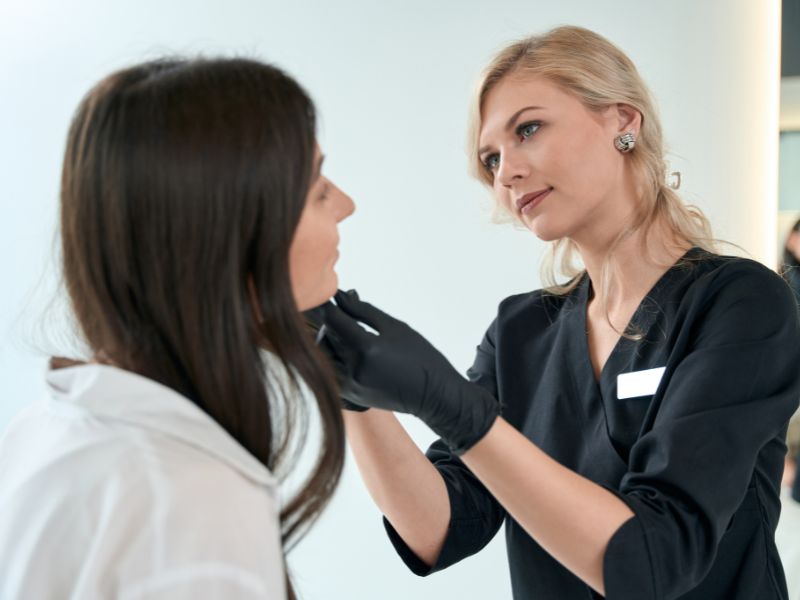
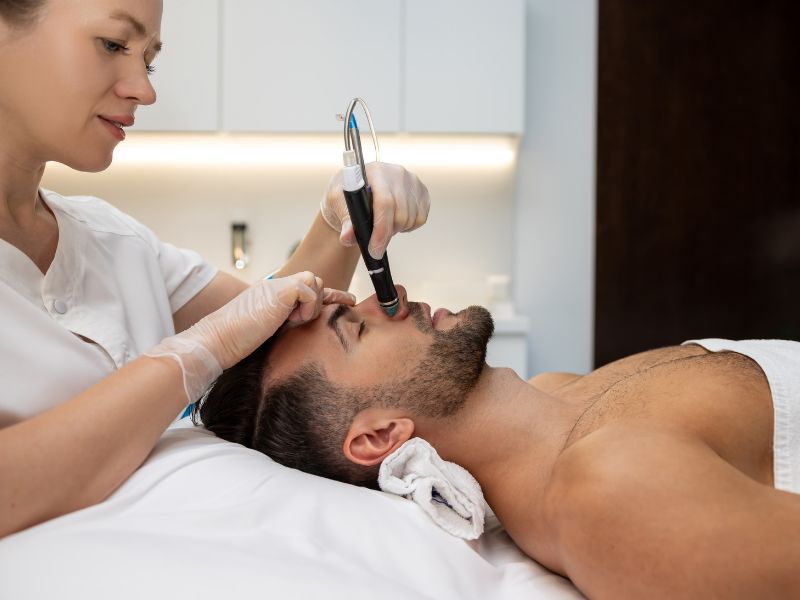
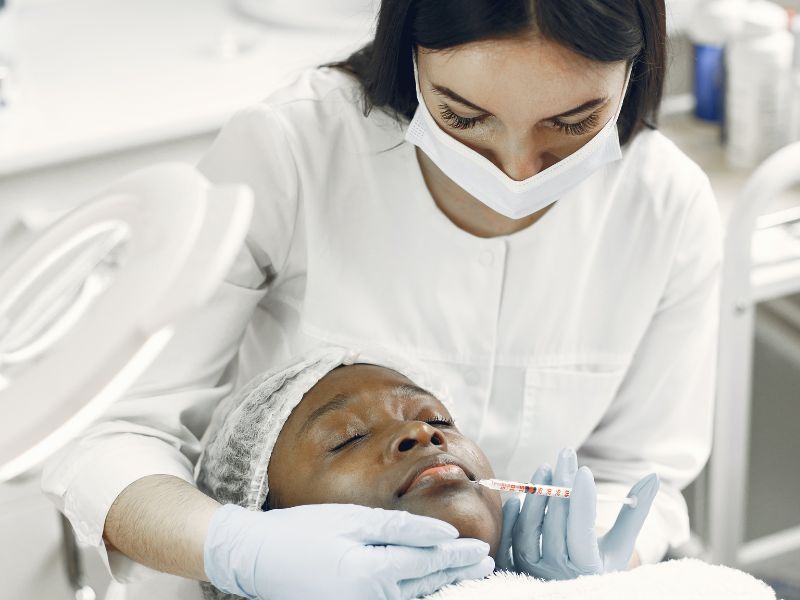
In short, aesthetic medicine is now a predominantly female profession delivering care primarily to female patients.
Leadership Does Not Mirror The Workforce
Despite this, women hold only 10-20% of senior leadership, editorial, and specialty governance roles across aesthetic and adjacent medical fields (5).
Antonia explains: “The women of aesthetics are, to me, in their defining era. From founders and brand leaders to facialists, surgeons and doctors, they are shaping the industry with grace, authority and real influence. Not just through results, but through education, ethics and the confidence they inspire in patients and peers alike. This isn’t a moment. It’s a shift.”
However, she highlights a parallel reality: “The visible leaders in UK aesthetics, the educators, founders and respected clinicians shape the culture of the industry by guiding ethics, patient expectations and standards of care. However, most day-to-day treatments are delivered by a much broader workforce operating in a faster, access-driven environment where demand and convenience play a larger role.”
This creates a structural divide between those who define professional direction and those who deliver the majority of care.
The Legacy of Medical Hierarchy
Aesthetic medicine evolved from traditional medical and surgical specialties, and that legacy continues to shape perceptions of authority.
Surgical titles, hospital backgrounds, and academic affiliations still confer automatic credibility in media, education, and regulatory discourse – even though modern aesthetics is now largely delivered outside hospital settings.
Antonia notes: “Traditional medical hierarchy still quietly shapes who is recognised as a leader, even in a field that prides itself on accessibility and modern communication.”
Highly experienced nurse prescribers and advanced practitioners routinely manage complications, safeguarding concerns and long-term patient care, yet may struggle to access the same governance platforms as medically qualified colleagues.
Why Influence Lags Behind Workplace Change
Workforce demographics can shift rapidly. Influence systems rarely do.
Authority in healthcare is traditionally conferred through:
- Academic publications
- Faculty appointments
- Conference speaking platforms
- Editorial board membership
- Regulatory or advisory committee roles
High-volume aesthetic practitioners are often deeply embedded in clinical delivery rather than academic or policy pipelines. Their experience remains largely invisible in the systems that convert expertise into recognised authority.
Antonia explains: “The workforce has diversified quickly, but the structures that grant influence still reward visibility and traditional credentials over sheer clinical exposure.”
This creates a paradox: those most exposed to patient risk, complications, complaints, and medico-legal consequences are often the least involved in shaping the rules designed to control those risks.
Conference Stages Quietly Shape Power
Conference platforms do more than disseminate knowledge. They signal who the profession should listen to.
Large analyses of medical conferences across specialties show that approximately 66% of clinical lectures are delivered by men, with over a quarter of sessions featuring all-male panels (6). Aesthetic and surgical conferences reflect similar patterns.
Antonia observes:
“Conference stages don’t just share information. They quietly decide who becomes the reference point for the industry.”
Repeated visibility creates a feedback loop: exposure becomes credibility, which leads to further exposure and influence.
When Work Becomes Feminised, Status Can Fall
Sociological research across multiple professions demonstrates a recurring trend: as roles become female-majority, perceived status and pay often decline, even when skill and responsibility remain unchanged (7).
Aesthetic medicine may be experiencing a similar shift. As non-surgical aesthetics became increasingly female-led, aspects of the work began to be framed as “service-based” rather than “medical”, despite requiring advanced anatomical knowledge, pharmacology, and risk management.
Pay Mirros Power
Leadership imbalance is closely tied to income disparity.
Across aesthetic-adjacent specialties, male physicians earn 20-35% more on average than female counterparts, even after adjusting for experience and working hours (8).
At the same time, women deliver a substantial proportion of revenue-generating clinical activity. This creates a structural contradiction: those carrying the greatest clinical exposure often receive less financial and institutional recognition.
The Invisible Leadership Sustaining Patient Safety
Much of the most critical leadership in aesthetics occurs away from public view:
- Declining inappropriate treatments
- Managing complications
- Mentoring junior practitioners
- Developing clinic protocols
- Reviewing consent processes
- Raising safeguarding concerns
These activities stabilise the profession but rarely generate public profiles.
Antonia explains: “Public authority tends to follow performance. Much of the most important leadership sits in prevention.”

Why This Matters For Standard and Public Trust
When those shaping policy are removed from daily clinical realities, guidance can become idealised, difficult to implement, and slow to adapt to emerging risks.
This contributes to:
- Variation in standards
- Practitioner confusion
- Inconsistent patient experiences
- Increased complaints and claims
Over time, patients notice when public messaging does not align with real-world care.
Structural Change, Not Individual Confidence
Calls for women to “lean in” or “be more confident” misunderstand the problem.
Antonia is clear: “Women don’t usually need telling to be more confident. They need access to the rooms where decisions are made.”
Meaningful change requires structural reform, including:
- Transparent pathways from clinic to governance
- Funded speaking and faculty opportunities
- Mentorship linked to policy exposure
- Broader criteria for leadership selection
- Recognition of competence alongside traditional titles
Redefining Leadership in Aesthetic Medicine
Leadership must move beyond titles and marketing reach.
Real leadership is demonstrated through:
- Clinical judgement
- Accountability
- Ethical decision-making
- Patient advocacy
- Mentorship
- Governance responsibility
When leadership is defined by impact on patient care rather than background alone, representation naturally becomes more accurate.
Closing The Gap
There is no shortage of clinical leadership capability among women in aesthetic medicine. What exists is a structural leadership gap – one supported by data from healthcare at large and mirrored in visibility metrics – that persists because influence systems have not yet caught up with workforce reality.
Closing this gap is not a matter of individual confidence – it’s a matter of structural opportunity, intentional sponsorship, and reframing authority around demonstrated competence.
References
- World Health Organization (2019) Delivered by women, led by men: A gender and equity analysis of the global health and social workforce. Geneva: WHO.
- General Medical Council (2023) The state of medical education and practice in the UK. London: GMC.
- LIV Dermatology (2023) Women’s History Month: Gender disparities in aesthetic medicine. Available at: https://www.livderm.org (Accessed: 10 February 2026).
- International Society of Aesthetic Plastic Surgery (2019) ISAPS global survey on aesthetic and cosmetic procedures. Available at: https://www.isaps.org (Accessed: 10 February 2026).
- Rohrich, R.J. et al. (2020) ‘Is there gender inequality in plastic surgery?’, Plastic and Reconstructive Surgery, 145(2), pp. 487–494.
- Ruzycki, S.M. et al. (2019) ‘Trends in gender parity at medical conferences’, Journal of Women’s Health, 28(3), pp. 302–308.
- Kletzing, S. (2014) ‘Aesthetic leadership’, in Leadership in aesthetic medicine. London: Taylor & Francis.
Dermatology Times (2022) Bridging the gender gap: Women leading the way. Available at: https://www.dermatologytimes.com (Accessed: 10 February 2026). Medicine


Share This Story, Choose Your Platform!


Cosmetic Insure Disclaimer
All the information provided in our Cosmetic Insure Treatment Guides and blog articles serves as a valuable reference and informational resource. Our intention is to offer insights that assist you in making informed choices when exploring the extensive array of non-surgical aesthetic treatments available.
Please note that this information does not constitute medical advice. Any reliance you place on the content found within the Cosmetic Insure Treatment Guides, Cosmetic Insure blog articles, or on any part of cosmeticinsure.com is done so entirely at your own discretion.
Prior to considering any non-surgical cosmetic treatment mentioned anywhere on cosmeticinsure.com, we strongly recommend that you engage in thorough consultation with a duly qualified and accredited practitioner who possesses the proper training and comprehensive insurance coverage for the specific treatment you are interested in. Neither the author of the guides or blog articles, nor the practitioner who has verified these guides, nor Cosmetic Insure, can be held responsible or liable for any loss or claims resulting from the use or misuse of cosmeticinsure.com’s content. Your safety and well-being are our utmost concern.